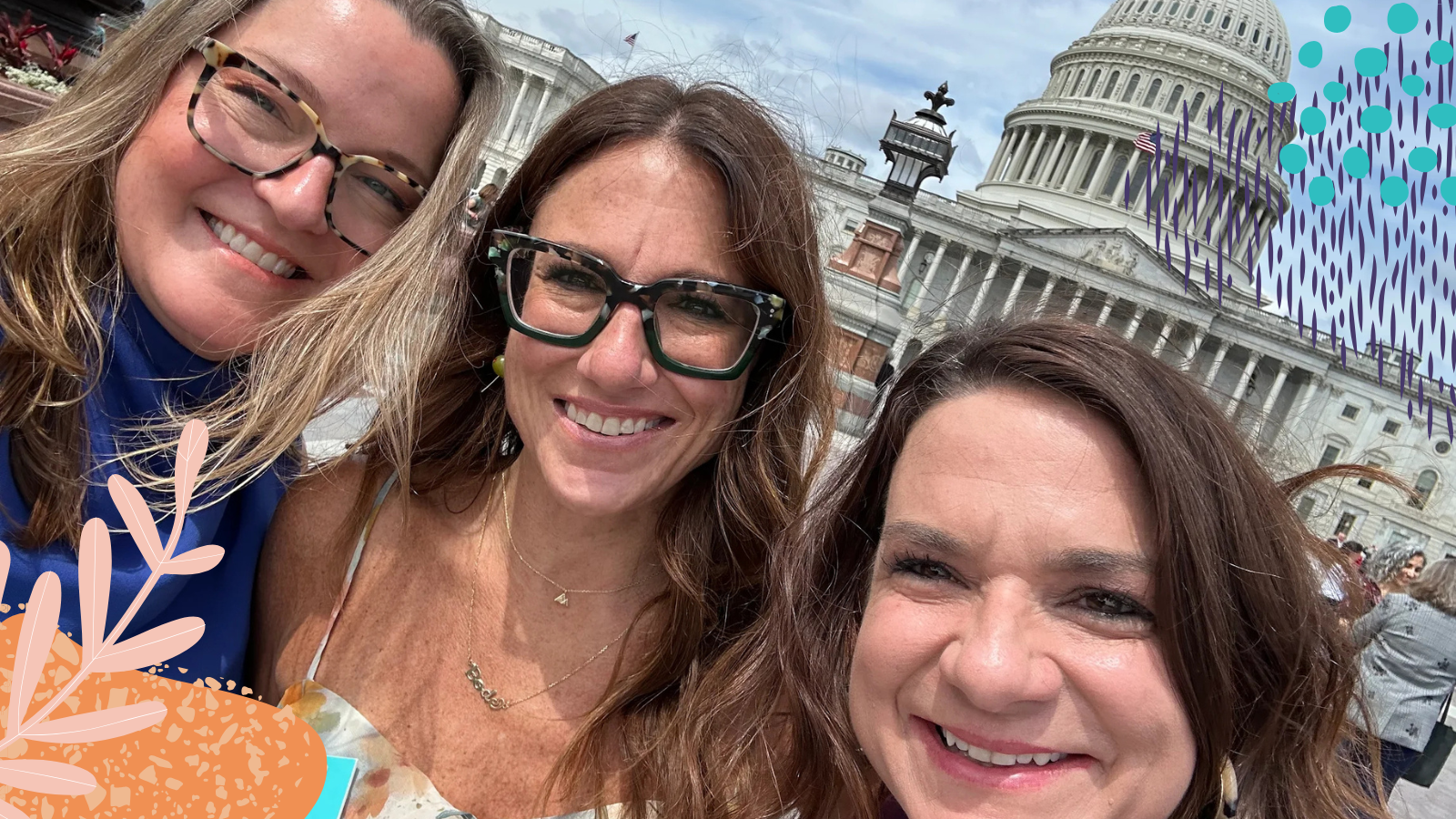
My better half, Sue Tellier is testifying before Congress this morning because the Rule of Two is under attack, and if it disappears, so do small businesses in federal contracting. I can’t even wrap my head around this. I mean, I can, it’s been a hell of a decade.
The Rule of Two is simple: when there’s reasonable expectation that at least two small businesses can compete for a contract at fair market prices, the government must set it aside for small business competition only. It’s been protecting small business opportunities for over 40 years. But the Federal Acquisition Regulation (FAR) rewrite could eliminate it because it lacks statutory foundation. We’re talking about $113 billion in contracts that could suddenly become open season for massive corporations to crush small businesses.
Sue runs JetCo Federal, a Women-Owned Small Business that’s “freakishly obsessed with efficient warehouses.” Eighty percent of her work serves the defense industrial base, packaging solutions that protect DoD parts for storage and distribution. She’s been supporting the Defense Logistics Agency, Army, and Navy since 2009, and her employees are incredibly proud to support the warfighter. But she’s watching the entire ecosystem that allowed her to build her company get systematically dismantled.
Sue and I serve on boards together (did I mention she’s Vice Chair of Women Impacting Public Policy), travel together (where chaos ensues – her fault, not mine), and we’ve been in the trenches of small business ownership for a really long time. Her testifying in front of the House Small Business Subcommittee on Contracting and Infrastructure takes time away from her business, her team and other really important things, but she also knows this is about small businesses surviving and competing in federal contracting.

What Happens When the Rule of Two Goes Away
The Rule of Two isn’t charity. In fiscal year 2023, nearly two-thirds of dollars awarded to small businesses, more than $113 billion, were awarded through small business competitions. As Sue will tell Congress, “small and socio-economic set-aside programs are not acts of charity. They exist to ensure the government benefits from the innovation, competition, and value that small and diverse businesses bring to the table.”
Here’s what small businesses face without the Rule of Two: competing against massive corporations for every contract. She explains it perfectly: “Small business owners must make rational business decisions about our time budgets. When we weigh the opportunity cost of government vs. commercial pursuits, government rarely wins. Many of us are here because of passion and purpose.”
The Rule of Two “injects confidence into the process for small businesses that their investments of time and resources can lead to meaningful wins—not just $249,000 awards, but contracts worth millions.” Without it, small firms inevitably shift focus to the commercial market, which offers fewer barriers and a more welcoming environment.
The Numbers Are Brutal
Since 2010, the number of small businesses winning federal contracts has dropped by 50%. Let me say that again: half of all small business federal contractors have disappeared in 15 years.
In 2010, about 125,000 small businesses held federal contracts. By 2020, that number collapsed to just under 76,000. We lost nearly 70,000 small business vendors. While this was happening, federal spending on small business contracts actually increased from $97.95 billion in 2010 to $183 billion in 2024. Fewer companies getting bigger pieces of the pie, exactly what Sue calls a “stratified contractor pool.”
Between 2010 and 2019, there was a 38% decline in small businesses providing common products and services to the federal government. New small business entrants into federal contracting declined by 79% from 2005 to 2019. We’re not just losing existing small businesses—we’re scaring away new ones.

The Government Keeps Making It Worse
The government is pushing more contracts through consolidated vehicles like Best-in-Class contracts. It can cost $75,000 to $100,000 just to submit a proposal for these contracting vehicles. Most small businesses can’t afford that kind of upfront investment with no guarantee of return. But that’s exactly where the government wants to move more contracts.
The FAR Part 10 transformation has already “stripped” references to small-business consultation and set-aside considerations. The proposed streamline “effectively trims market research down to three very limited situations.” Those prescriptive triggers related to bundling, consolidation, and small business outreach? Gone.
For experienced government vendors like JetCo, “this increases risk.” There’s no longer a mandated pause to engage small-business advocates or explore set-aside potential. Agencies can proceed quickly, potentially overlooking small-business opportunities entirely. Under pressure to move fast, they default to expedience – big, familiar contractors.
The kicker is the government isn’t even using proper rulemaking processes for these dramatic changes. They made a change Friday night that undid something they’d changed just two and a half weeks earlier. How are small businesses supposed to keep up with rules that change faster than we can learn them?
What This Means for Real Business Owners
Sue’s going to explain to Congress what this means in real terms, she has to “factor risk into my business decisions,” including “how I use my time, how I manage unpredictability in my customer base, and how I price my solutions.”
She needs “some degree of confidence that I have a chance at winning an opportunity to justify pursuing it. Otherwise, I’m wasting precious time resources for my small-but-mighty team.” This is the reality every small business owner faces, we don’t have unlimited resources to chase opportunities stacked against us.
If a small business doesn’t know their competitors are also small businesses and understands they might be competing with much larger corporations, it completely changes whether they bid on that contract. Why would you spend months preparing a proposal when you know a Fortune 500 company can underbid you and absorb losses you can’t?

The National Security Problem Nobody’s Talking About
The Department of Defense has seen a 40% drop in small business vendors. This isn’t about fairness, it’s about national security. When our defense industrial base gets concentrated among a few large players, we lose redundancy and resilience.
Sue’s company does specialized work that requires deep expertise, flexibility, and quick adaptation to changing requirements. Large corporations cannot provide this level of innovation and service, but companies like Sue’s are getting pushed out by a system increasingly rigged against them.
As Sue will remind Congress today: small businesses “bring innovation, agility, and cost savings, while providing the government and taxpayers with options to meet mission needs quickly and effectively. The innovation we deliver strengthens America’s competitive edge in the global marketplace.”
What Needs to Happen Right Now
Sue will end her testimony with a straightforward warning: “If we continue to face unpredictability and competition challenges, you should not be surprised when fewer of us remain engaged in federal contracting.”
The solution requires immediate action: “Retaining and codifying the Rule of Two, making it a true ‘shall’ requirement applied consistently across vehicles—is essential to keeping small firms engaged in the federal marketplace.”
Congress needs to provide statutory protection for the Rule of Two before it vanishes. We need agencies to follow actual rulemaking processes instead of making dramatic changes with no transparency. We need to stop the systematic consolidation that’s pricing small businesses out of opportunities they used to win.
The Small Business Act is clear, small businesses “shall have the maximum practicable opportunity to participate in the performance of contracts let by any Federal agency.” That’s impossible if the government eliminates small business-only competitions and forces companies to compete against significantly larger corporations.
The Bottom Line
When Sue walks into that hearing room this morning, she’s not just representing JetCo Federal. She’s speaking for every small business that built something from nothing and believes hard work and innovation should matter more than company size.
As she’ll remind Congress: small businesses “are not just beneficiaries of federal contracts, they are essential partners.” The question is whether anyone in that room understands what they’re about to lose.
Because once we’re gone, we’re not coming back.