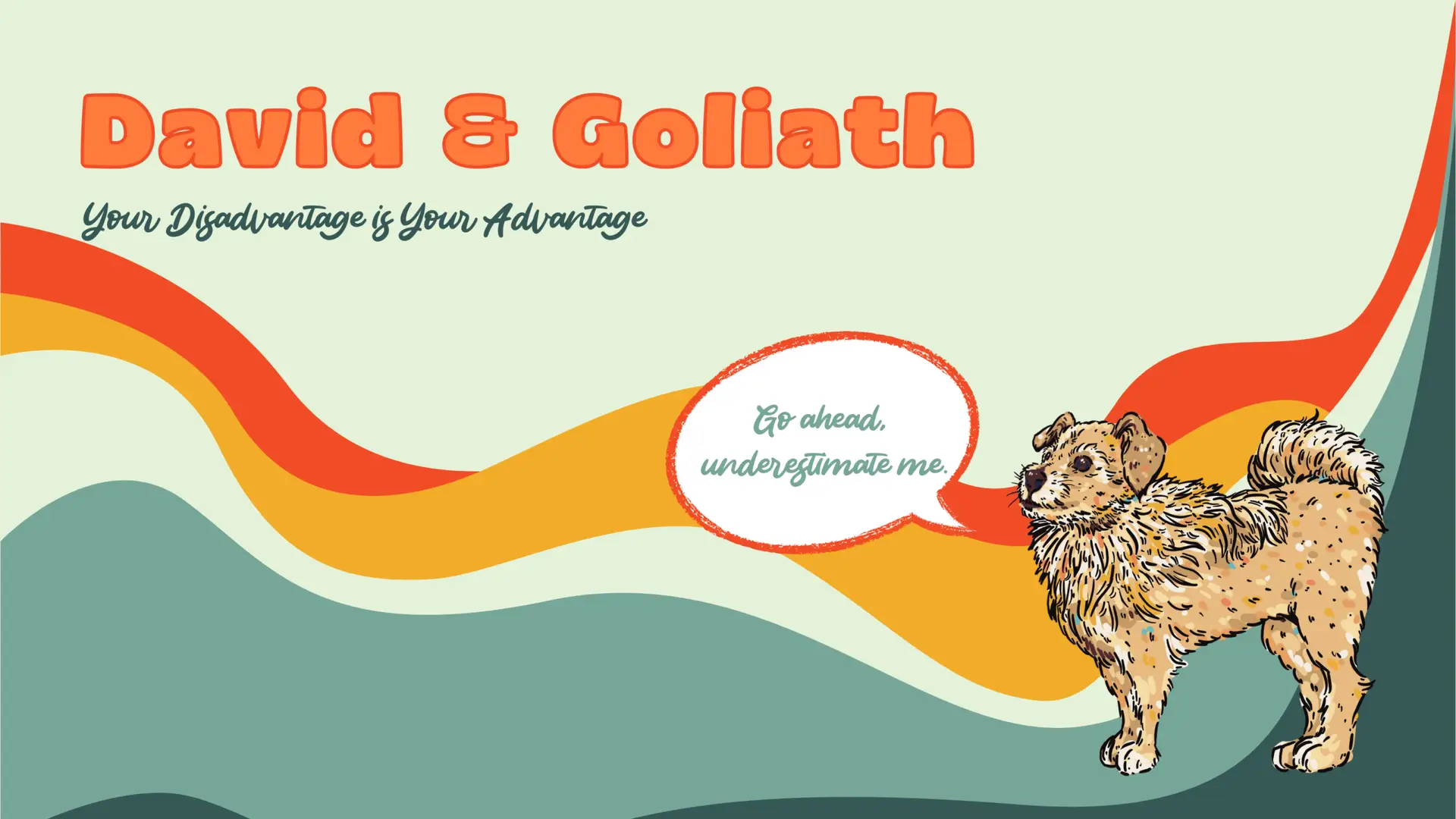
The David and Goliath story we were all told in Sunday School…yeah, it wasn’t true. See, David knew exactly what he was doing and he knew how easy it would be to defeat Goliath. It was everyone else (isn’t that always the case) who shaped our childhood stories. We were told he was a small, young and defenseless kid – no armor, no sword, no training; in actuality he’d spent years protecting his flock from wild animals (like really big ones) with a slingshot as his only weapon. Meaning he was used to hitting moving targets from a distance; and Goliath was stationary and weighed down by armor. He was only trained for close combat, because that is how these fights were ALWAYS fought. He flipped the script. Don’t you love it when you don’t play by the rules?
This is the premise of Malcolm Gladwell’s book, David and Goliath: Underdogs, Misfits, and the Art of Battling Giants. What society sees as disadvantages are the exact things making you unstoppable aka resilient aka awesome. He calls them desirable difficulties: disadvantages forcing you to build skills, perspectives, and grit those with every advantage never had to develop.
What Is Learned Out of Necessity Is Inevitably More Powerful Than the Learning That Comes Easily
My Kolbe score and other assessments indicate I should be wildly disorganized, chronically distracted, and allergic to structure….which yes but also…because of my neurodivergence, I built systems to work around, through, and with my brain. My talents, perspective and survival skills come from what people label a “disadvantage,” when in actuality; it’s my superpower.
If reading is a struggle, you get fast at listening, pattern-spotting, and remembering what people say.
If home is chaotic, you learn to scan rooms, read people, and defuse tension.
This is what Gladwell is talking about; the hard sh*t doesn’t sit off to the side while you succeed; it is the foundation of everything. IT’S YOUR BIG DEAL ENERGY.
You knew I’d tie it to this at some point.
Be Disagreeable
Gladwell talks about disagreeable people: the ones who aren’t obsessed with being liked and will push, question, or say the thing everyone else is avoiding. Successful entrepreneurs and innovators score high on disagreeableness because chaos and failure were their norm; they got good at hard things because they never had the option of easy.
That’s the story for a lot of us building businesses and brands.
When things are harder for you from day one because of ADHD, dyslexia, trauma, poverty, loss, you name it; you develop a weird tolerance for discomfort.
It’s why I have Find Comfort in the Uncomfortable tattooed on my arm, because discomfort is why i’ve always pushed, challenged, disrupted, argued, advocated and worked harder.
Malcolm (we’re on a first name basis now), would say this is the upside of being disagreeable; you’re going to challenge the status quo.
More Doesn’t Equal Better
Society (and everyone) tells us more is better: more money, more support, more stability, more connections. It sounds reasonable until you look at where growth happens and resiliency is formed. If things rarely go sideways, you never have to discover what you do under pressure. Having everything go your way doesn’t build the same muscles as having to fight for every inch.
And now for the hecklers in the back; hard doesn’t automatically equal noble or enlightened, and pain isn’t some magical personality upgrade. What I’m saying is the hard chapters are what built you, made you unforgettable, capable and it’s the foundation of your story. The very circumstances that should have sidelined you are the same ones that taught you how to think differently, persist longer, and navigate messier realities than most people ever have to face.
I’m not saying it should be glorified, but it should be recognized.
You are here because of who you are — because of what you’ve lived, what you learned the hard way, and what you built when you had no choice.
Don’t hide this part of you; it’s what makes you the David to all the Goliaths.