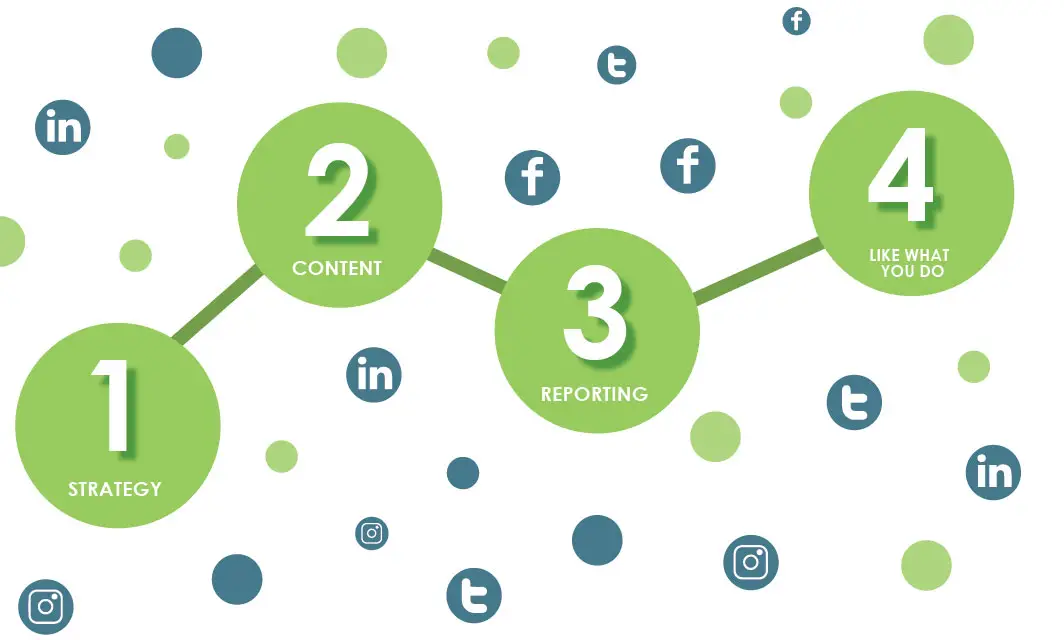
Strategy
Strategy is a flexible document, create it, but don’t let it sit on a shelf somewhere. Review this weekly if you can, it helps keep the train on the tracks and allows for alignment of social to business value, not just social for social sake. This document doesn’t have to be complicated either. Usually Google is your friend, but in this case, a Google search of social media strategy steps can yield you anywhere from 3 to 36 (wtf) “easy steps to creating a social strategy that sticks.” First, we’d argue 36 steps is not easy, but then again, we actually stopped reading after the title since that was ridiculous. Social strategy CAN be simple but it does have to start with goals that align with business interests, this is how you will “show the case for social” and maybe even your job, later on too. So take the time to commit goals to paper that support business objectives early on and then adjust as needed. This also makes a great conversation piece in staff meetings as it gets to be fun and slightly competitive to see what your company is achieving based on metrics assigned. By measuring what matters via your business plan you can then show, not just talk about, but really show performance on social as it relates to key business objectives or mission values.
Content
Content for your audience(s), not necessarily for your CEO. We have been here a million times. The boss lady or boss man doesn’t like the content you are providing, s/he wants it to read this or that, and while we are at it he is complaining about not “seeing the Facebook ads, where are they?” Unless your CEO somehow happens to BE IN your targeting, then s/he’s probably not going to get it (they aren’t SUPPOSED TO – that’s the idea of targeting). But that’s okay, that’s what measurement is for, as soon as you work your reporting magic at the end of the month or week, s/he will understand that what you are doing makes business sense if it has escaped his/her narrow mind and lack of tech savvy understanding. Soon s/he will leave you alone on this but you have to produce in order for that to happen.
Reporting
Reporting metrics for the items that align most closely to your business case in order to make the need for social actual, not just hypothetical in nature. We covered this a little above, but in order for you to show progress against your goals you have to know precisely what you are looking for and comparing it to month-to-month. So be sure to take a baseline overview when you inherit the accounts to be sure to show how far you have taken it. Additionally, monitor additional causation or correlative data to draw out additional points that you can use to analyze performance against business objectives. Over time as you are more familiar with what can be tracked, then you are able to become more effective and creative in analysis of key information. This always helps us get a better handle on what is really happening with the numbers and to adjust your strat/tactics where needed to deliver appropriately.
Lather, Rinse, Adjust, Repeat
Finally….
Like what you do. This sounds super granola and group hug of us, but it’s true. If you don’t like what it is that you are doing your tone in your copy will let your audience know. The social media person has to be a good ambassador for the company, they are the new “receptionist” or first gatekeeper of your company. So EVEN if you have good content but your tone is shit, you will not be relevant or engaging to your audience. So check in with your social media gal or guy and be sure they are really feelin’ it because if they are tired of what it is they do, or the company, or they have a neutral to negative attitude, everyone else will see, feel, read it and transfer that to your brand. The “voice” of your social channels is a very important component to your overall brand reception by the public. Don’t leave it to some amateur or worse, some jerk to handle just because “no one else wants to do it.”
Struggling to find your social savant in your company? Fear not, we’re here to help you. Contact us to help you get your groove back. We love social.