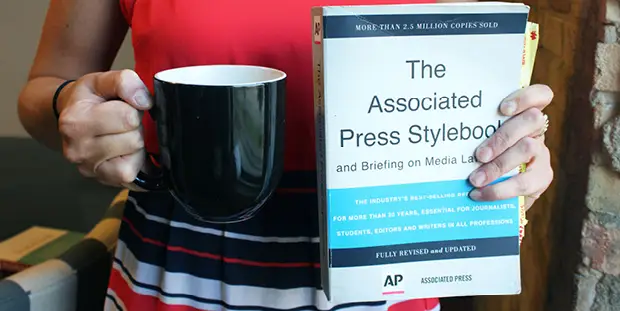
Confession: Even though I’m a writer, I still have to look up grammar stuff from time to time. I’ll often find myself wondering where an apostrophe should go, how I should format that date or time, or who the heck uses an Oxford comma (spoiler, we do!). But, when I have these questions, I find comfort in the fact that there is one place I can always look to find the answer — style guides.
A style guide is a book that outlines the rules you should follow when doing a particular type of writing. Whether you are blogging, tweeting, or writing articles to submit to major publications, one thing is certain; your style guide should be your bible (fact, I had to look up whether I should capitalize “bible” there).
Why Does The World Need Style Guides?
Using a style guide means that your writing is both consistent and correct, and both of these things are important in all types of writing. Consistency builds trust with your reader and writing something one way once, and another way later, makes you look sloppy; a style guide is a great way to keep it professional. Style guides also:
- Improve your grammar and punctuation skills
- Save time
- Help define your tone and voice
- Improve your reputation
What Are The Options?
There are a few different style guides to choose from. Here are some options.
Associated Press:
Otherwise known as AP Style, this book is the choice for journalists and news writing. This is also what we use. The AP Guide was written for the news wire, so it’s simple and to the point. “Extras” like italics and underlining are few and far between.
Chicago Manual of Style
This is the standard for book publishing. Geared toward fiction and nonfiction writing, it’s not generally used for scholarly publishing.
Modern Language Association:
MLA style is mostly used in the academic world for literature and humanities (I used one in college). You probably used it to figure out how to cite sources in term papers (and we all need to know how to cite sources in the era of fake news!)
Create Your Own:
While you may want to stick with the general rules outlined by one of the above books, your tone and voice are all going to be unique to your organization, and maybe your style should too. Your style guide will mostly pertain to things like how you write across different social channels, but you can also include some of your own rules to keep things fresh.
The point is, no matter what you do or guide you choose, the important thing is to be consistent. While guidelines often change based on technology and our evolving language (in 2011 the AP Stylebook deemed that “e-mail” becomes “email”) a style guide gives you somewhere to start. And they update every year.
So, don’t waste valuable time wondering if you should type out “fifty-five” or write “55”, just check your style guide.
(In case you’re wondering, AP Style says it’s 55.)