Unless you live under a rock, you’ve heard about content marketing. Those of us who live and breathe content marketing sometimes wish we could crawl under there with you.
Content marketing is a lot of work. It’s creating a lot of content – words, images and videos – to post on your website, on your social media channels, everywhere. And content is changing. It’s more than just words and images on a page.
Content is Not Just Words on a Page
- Images and visuals used. A picture is worth a thousand words, right?
- Infographics. Creatively displaying a lot of content or data in a visual format that people will look at. It makes data interesting to the human eye.
- We have always had TV commercials, now we have pre-roll video ads on YouTube and news sites, but brands can create videos to share exclusively online via social channels.
- One of the most common forms of content today is blogging, a way to create articles and resources on your website based on your industry, your products and your solutions. These can be several-hundred words, but still easy to read and digest when reading online.
- Live content. Yes, video can be in the moment with Facebook Live, Periscope and other great video sharing social channels. Add in live Tweeting and that’s a steady stream of content.
- We’re a more mobile workforce and people as whole are always connected to at least one device. Now we can get “old fashioned blog articles” read to us, and get more in-depth with discussions and interviews that we can listen to on demand.
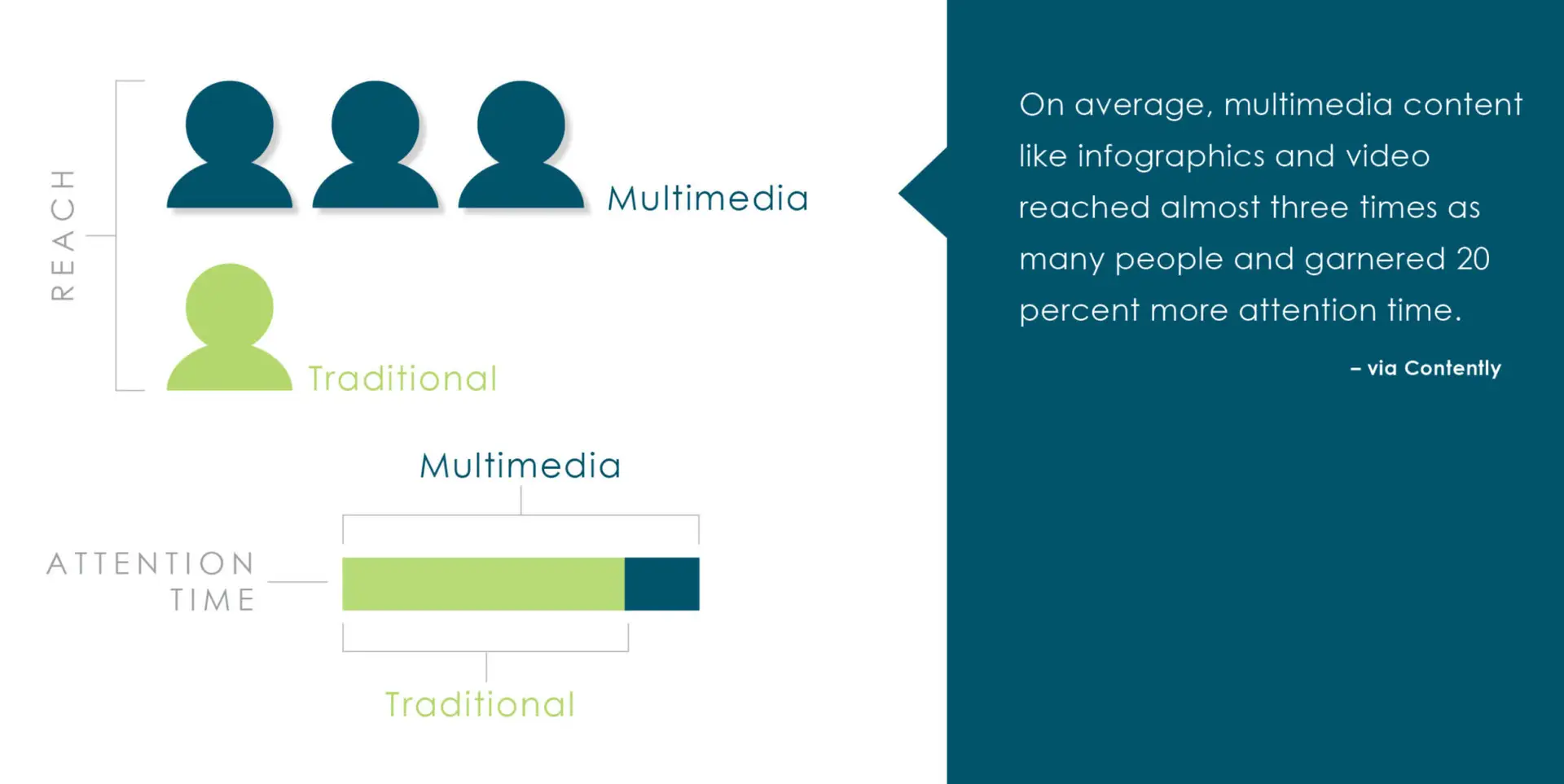
On average, multimedia content like infographics and video reached almost three times as many people and garnered 20 percent more attention time. – via Contently.
Multimedia is leading the way in reach and attention online. We know people don’t read online like they do offline, and that continues to be seen. Online marketing content should be visual to get attention, keep viewers engaged and get them to share or do what we want them to do.
Create The Right Content, and Share It In The Right Place
Know Your Audience
Before you get all overwhelmed about all of this content that needs to be created, the first step is to think about your target audiences. Yes, all content should be created for them. Content should be educational, informational, and entertaining – as much as you can be in your industry. Content should be on point with your brand, consistent in tone and voice.
Pick Your Channels Carefully
You don’t need to be everywhere for everyone. We use a little TLC – Think Like A Customer. Dig into what publications they read, where they hang out online and what’s important to them. If you’re talking to biomedical engineers, odds are they’re not going to hang out and find you on Facebook. Maybe check with an industry association website or LinkedIn group as a place to connect with them.
Connect Content to Your Website, Your Hub
When creating content, we always look at the website as a hub for information. In the online space, this is ultimately where we want people to go to take action – be it to sign up for an email list, shop, request a quote, read the full article, watch the full video, etc. Consider what you want readers/viewers to do after they see the content piece.
Also, from the search engine optimization SEO perspective, keep in mind that search engines don’t watch videos, listen to podcasts or look at your awesome infographics. Be sure to transcribe a video, blog about the podcast and describe & tag images and graphics correctly. This will help search engines find and index your various content. When they find it, then those searching for your topic areas will find it too.
Our team continues to create more types of content for our clients. From infographics, great visuals for Instagram, videos for websites and client events, and of course written content for blogs, articles and marketing collateral. All of which is becoming more visual, easy for viewers to scan, digest and comprehend.
What types of content you like to consume the most? While cute cat videos are great, unless you’re a veterinarian or cat whisperer, sharing these may get you good metrics, but nothing to impact the bottom line.