Here in West Michigan we are surrounded by a thriving art and design culture. The West Side is host to multiple art museums, art-focused organizations and a rich underground art scene. Last week, West Michigan Design Week brought these different communities together, showcasing a variety of disciplines including architecture, interior, graphic, and industrial design and much more. The events provided a great way to network with other design professionals and see the impact this industry is making on our community. At the same time, it allowed design professionals of different disciplines to step outside of their own perspective and experience many other design related topics. Below is a re-cap of our favorite events that happened during West Michigan Design Week.
The Power of Color Panel Overview:
One event that was of particular interest to #Team834 was the The Power of Color panel discussion at the UICA. This discussion brought many perceptions, interpretations and applications of color. The panelist talked about the use of color within specific industries and explained how color plays a substantial role in our daily lives, whether that be informatively, emotionally, directionally, etc. The topic borought to light the importance that all designers need to be conscious of with every project.
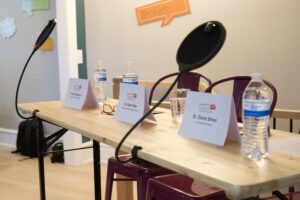
The panelists in attendance were:
- Vivian Evans, Principal Designer of CMF and Trend at Newell Rubbermaid
- Sara Molina, Lead Interior Designer at Progressive AE
- Michael Huda, Technical Support Specialist, Customer Applications at X-Rite Pantone and;
- Diane M. McKnight, MA, MSW, LMSW, LCSW – Art Therapist/Psychotherapist.
Each panelist offered a unique perspective on the questions they were presented, all of which were relevant when working with a wide variety of brands/clients.
Color and Space Design:
Color is very subjective. Messaging, environment and culture all play a role in how color is perceived by different audiences. Its important to stay educated and understand how this affects your individual work. In our culture, blue can imply accessibility, while red implies the opposite, purple evokes relaxation, and so on. When communicating a message within a space (through signage and collateral) graphic designers need to be conscious of color and what they represent culturally.
Molina was able to explain how color impacts space planning. Directional indicators, overall communication of a certain attitude and how the space caters to its intended use can all be derived from the use of specific colors in combination with signage, layout, furniture and other factors.
Color and Emotion:
McKnight touched on color as it relates to emotion. While this is influential within a space, McKnight dove a bit deeper into the psychology and sociology of why we as humans associate different colors with different emotions. As an Art Therapist, McKnight uses color to evaluate and treat patients in a number of different ways.
Color and Branding Design:
Huda and Evans went into more detail about how color effects branding, and more specifically products. The Pantone Matching System (PMS) is the universal system for managing color consistency, through ink, textiles, paint, plastics, and other materials. As a part of X-Rite Pantone, Huda explained some of the chemistry behind creating consistent color across a variety of mediums and materials.
Visual brand consistency is extremely important for overall brand impact. With brands that offer products of different materials, textures, sizes and uses it is imperative that the color match branding standards. As a Color, Material, Finish (CMF) designer, Evans uses color in combination with different materials, textures and finishes to control the way in which a product is perceived through sensory experiences.
Evans also analyzed and predicted what colors will have an impact in different industries and how that can pave the way for future designs and products. Whether you’re working on the latest iPhone or Nike iD aesthetic, like Evans, or maybe something a little bit less goliath, color has a major impact on how that final product is viewed as part of a larger brand in comparison to other competing products within an overall industry.
“The Power of Color” was just one of the many events that took place over the course of West Michigan’s Design Week. This growing appreciation and observance of the importance of art and design in the community is what makes Grand Rapids a rising force in the national and international art scene. At 834, design is a huge part of what we do and how we support our services. We value the involvement of our staff in the community, especially where the arts are concerned. We value the impact this movement has made on the progress and economy of our city.