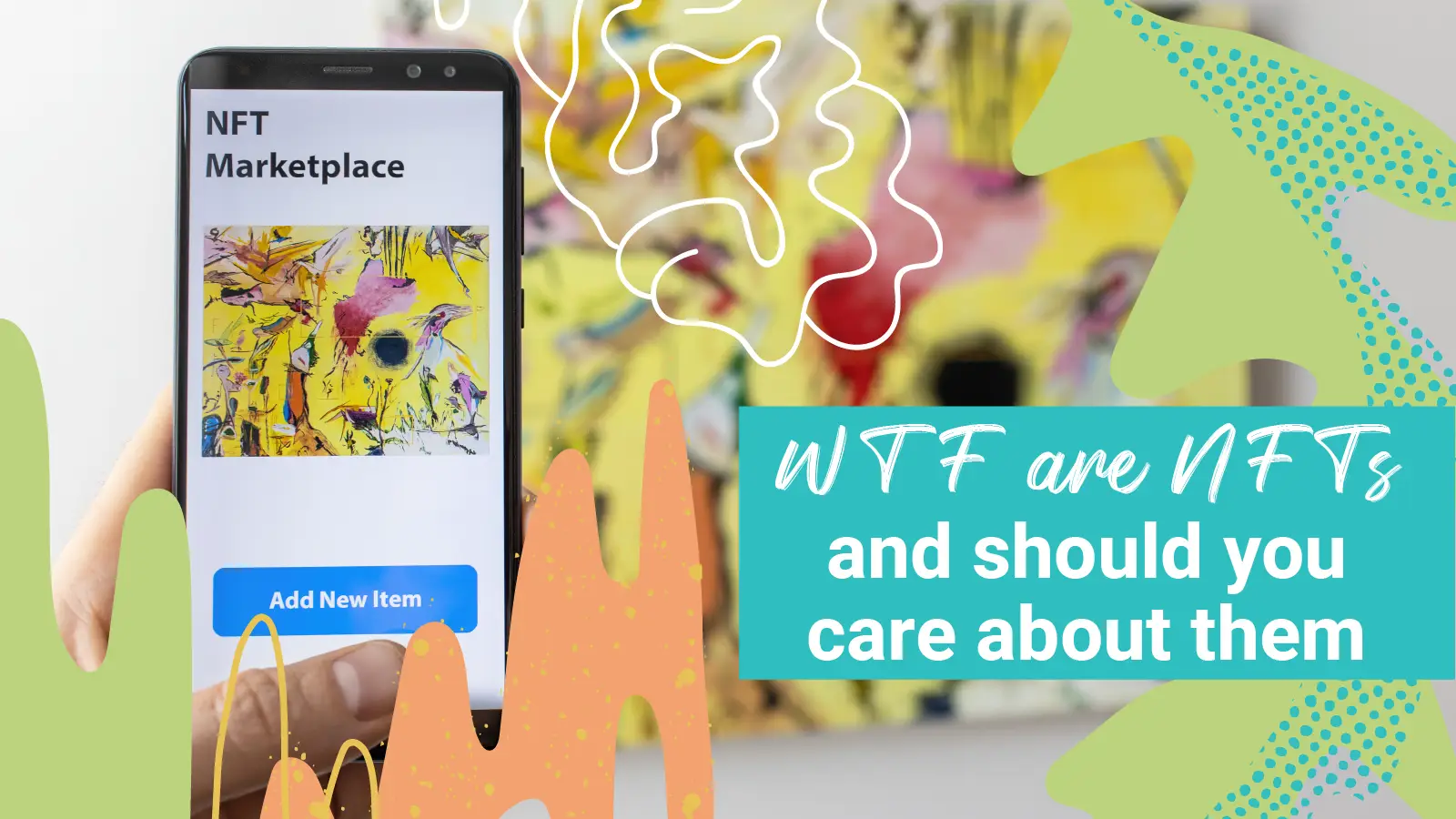
Here it is—the blog you’ve all been waiting for. It’s finally time to talk about weird cartoon monkeys and yet another acronym.
That’s right. We’re talking about NFTs, or non-fungible tokens. While they might literally have “fun” in their name, these digital collector items are pretty damn good at causing headaches. Get ready to dive into some really techy stuff…made accessible to the regular person because let’s be real. No one has the time to know everything.
But you can read this blog and then pretend you do.
What are NFTs?
Great question! As usual, Forbes has our back. “An NFT is a digital asset that represents real-world objects like art, music, in-game items and videos. They are bought and sold online, frequently with cryptocurrency, and they are generally encoded with the same underlying software as many cryptos.”
NFTs exist on a blockchain (which is what makes cryptocurrency a thing) and each one has its own unique digital signature. What that means is there’s only one of each NFT. Ever. So owning an NFT is like collecting a piece of artwork in real life, even if the art hasn’t ever existed in a physical form. Plus, only one person can own a specific NFT at a time. No duplicates, unique identifiers means these babies can sell for a whole lot.
But just like anything else, items are only worth what someone’s gonna pay for them (we’re looking at you, Beanie Babies). If someone owns an NFT, that doesn’t mean they’re rich. They’re only rich if someone else wants that NFT and is willing to pay a bunch of money to get it.
Long and short of it? They’re like digital trading cards, but if there was only ever one copy of each card ever printed.
Are NFTs Good for Marketing?
Kind of! Some brands have had a lot of success making NFTs of valuable assets or promo items and selling them off at high prices. Just look at Coca-Cola, which raised over $575,000 in 72 hours for one loot crate of digital accessories…that also happen to be NFTs. What does digital Coca-Cola taste like, anyway?
Other brands, like McDonald’s have been using NFTs to promote another kind of brand loyalty. Since McRibs fans have been known to do some wild things (like that time a guy in Austin ate 10 of them at once), McDonald’s decided to host a giveaway for—you guessed it—McRib NFTs. Needless to say, fans gobbled them up.
However, since NFTs are controversial and also pretty damn new to the general zeitgeist, they can be a risky move for a smaller brand…or they can help that brand make it big. Remember, NFTs are only worth what people are willing to pay for them. That means, like every other tactic, that they need to be used strategically.
You Said “Controversial?”
Yup. While some people are super into NFTs (we don’t judge either way), others think they’re a waste of time. Why?
Just like any other image on the internet, NFTs can be right clicked and saved to anyone’s computer. Sure, they don’t come with the fancy signature that proves someone owns it, but that does pave the way for copies of the NFT getting plastered all over the internet. Some investors don’t like that because of the whole scarcity = value thing, while other internet users just don’t get why you’d spend thousands of dollars on a monkey anyone can save for free.
The other big point of contention is the environment. We know what you’re thinking. How can a digital thing impact the environment? Well, the NFT itself doesn’t, but they way it’s minted does. In fact, the amount of electricity it takes to make one NFT is equal to what an average US household uses in 47 days. And since at the time of writing this, there are over 11 million NFTs in the world, those hours add up quickly. Still, that’s only the electricity used when making NFTs with a specific process, which could mean eco-friendly NFTs could already be around the corner.
Should I Care About NFTs?
Great question. If you’re looking for the next big thing that’s sure to get your tiny company into the headlines…maybe not. If you’re figuring out a strategic approach to encourage customer loyalty among an audience that’s pretty tech savvy? Yeah, you should probably give at least a bit of a shit.
At the end of the day, NFTs are art, investment opportunities, and a lot more. An NFT is also a marketing tactic, and just like any other tactic out there, it’s great for some brands and terrible for others. It all depends on your audience, goals, budget, and strategy.