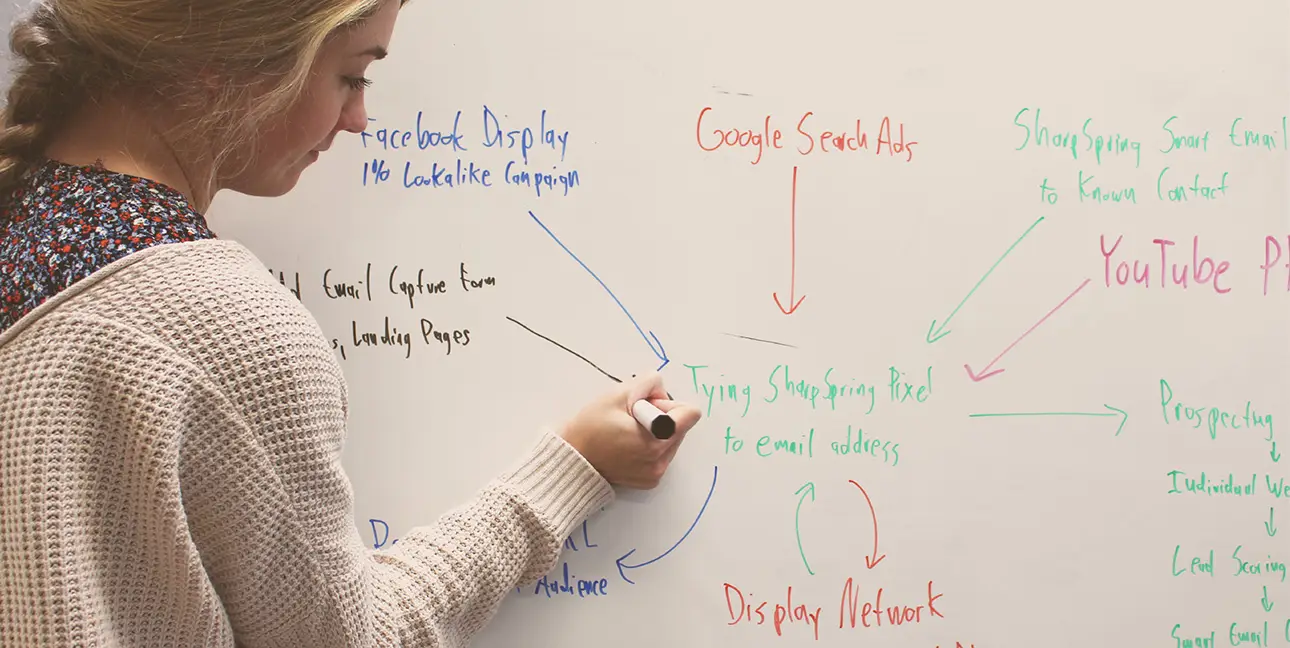
Hey, look at you, blog reader. There’s about a 60% chance you came from organic search and a 30% chance you came from a social referral. The other 10% either subscribed to our newsletter or came through some other direct traffic. We know where you came from, but what stage are your customers in, and what does that tell us about your conversion funnel? From the moment people hear of you to when they place an order, fill out a form, or engage with you, they’re part of a big thing we call conversion funnels. The more you know about the steps in your funnel, the better you can reach your prospects. Our team put together a little guide to get you started on conversion funnels. Keep reading to check it out.
CONVERSION FUNNELS
When we talk about a conversion funnel, we’re talking about the journey that moves your ideal customers from awareness to interest to consideration to conversion. To be clear, “conversion” isn’t some weird culty phrase. When we say a person has “converted,” that’s when they’ve actually purchased a product from your eCommerce store, signed a contract with you, gave you their email address, or engaged in a different way. See? Less freaky, more useful. Now that we’re on the same page, let’s talk about the stages of a typical conversion funnel.
AWARENESS
This is the first major step of the funnel. Before people enter the awareness phase, they have no idea who the heck you are. They don’t even know how to Google you yet. So that’s obviously not great. How do they first hear about you? Traditionally, you could do mass media placements in TV or print, but in 2019 we can be a little more strategic. Social media has billions of monthly active users, so the odds are good that your customer is active on a social platform. With some fancy targeting, we can build lookalike audiences to your existing customers. That means the social media ad networks put your message in front of people who have similar interests and habits as your customers. Boom! Now they’ve heard of you. Now it’s time to make them care.
INTEREST
It’s time to pique some interest. This is where Google comes in. Someone might search your brand name or some related keywords if they can’t remember your exact business. SEO (Search Engine Optimization) and PPC (pay-per-click) ads combine to capture those leads and drive them to your website. High-quality, shareable, informative blogs are a great way to be a thought leader in your space, capture qualified leads, and fill out your content calendar. PPC ads with strong supporting landing pages also improve the quality score of your ads. That means your cost goes down and your impressions go up. Bottom line? More views, less money. Once you’ve got people interested in who you are and what you do, it’s time to push them to the next stage.
CONSIDERATION
At this stage, your leads know you exist and what you do. They’re also interested in working with you, but for some reason they’re not convinced just yet. Maybe they need to see more of the services you provide (you are retargeting your ad campaigns, right?) or maybe they need a testimonial to convince them. This is when it’s important to know your audience super well. What’s the secret sauce to get them to turn that consideration into a conversion?
CONVERSION
Remember how we said a conversion can be a signed contract or just an email address? With marketing automation, you can use one to help the other. How? It’s essentially wizardry. Marketing automation lets you see what people are doing on your site. So if you have their email and you see them looking around at a specific page…Bam! You can automatically send them a direct, personalized message with more information, details, case studies, or whatever your strongest selling points are. Work in a personal field? Automatically notify your best salesperson to reach out to that contact directly. Knowing which part of the funnel your prospects are in makes it easier to give them the content they need to convert. It’s as simple as that. Are you capturing all that data and using it to drive conversion? Are all your marketing, branding, messaging, and public relations efforts truly integrated? If not, contact us today. We’ve got this.