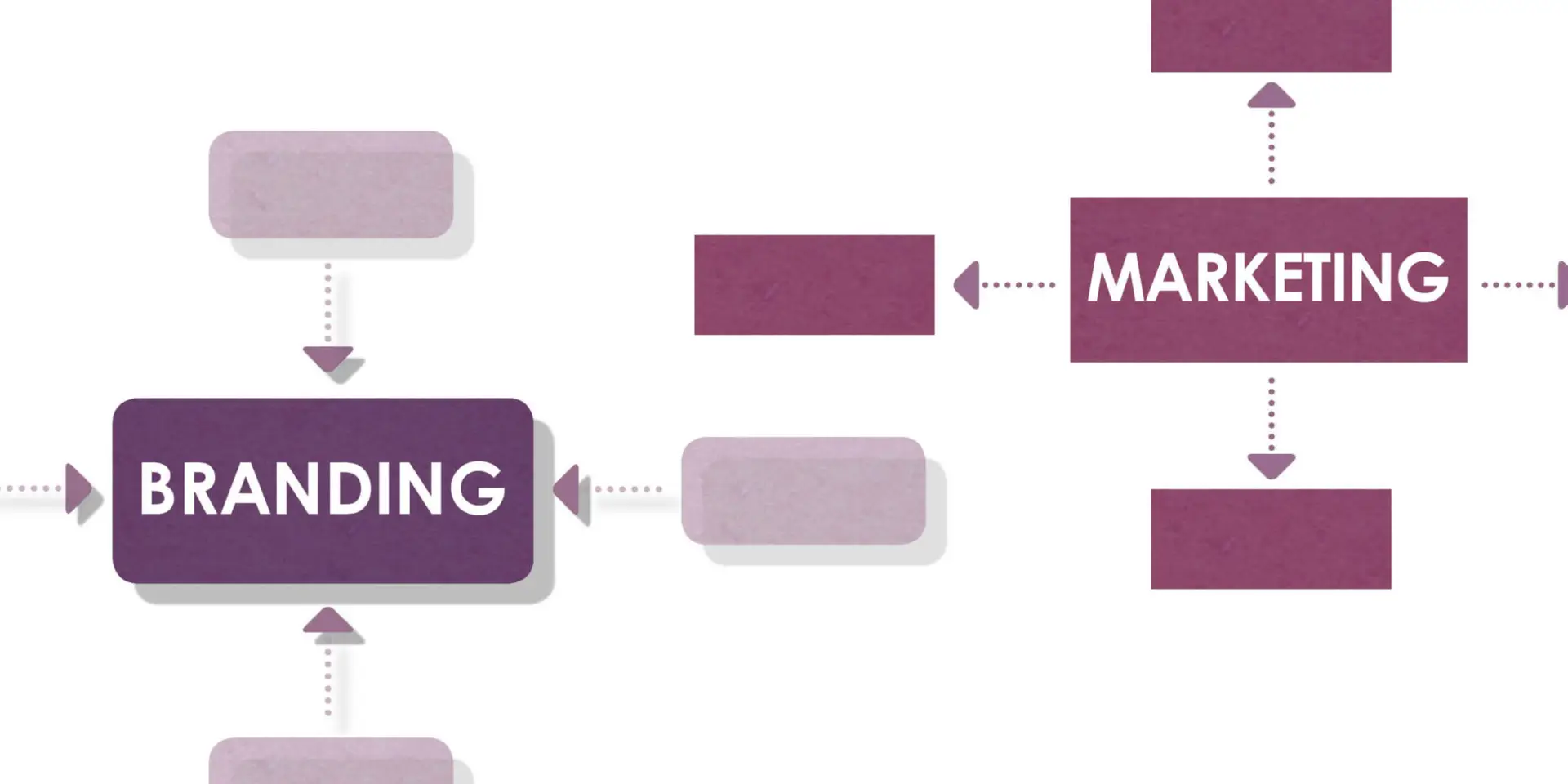
In our industry, that we all know and love so dearly, there is a very extensive list of verbiage. With this long and ever-growing list comes a whole lot of confusion, misunderstanding and misconstruing of definitions. Whatever the cause may be, we are going to tackle the commonly misunderstood concepts of marketing and branding, in hopes to bring some clarity on this subject matter.
Marketing and branding both hold very similar meanings and functions. Together they are the foundation to success for your product/company/service. From there, however, they stem off to provide different but equally beneficial purposes.
Look at marketing as a verb and branding as a noun (one is an action, one is a feeling). Marketing is the strategy and tactics that promote your product, service or business. Branding is the feeling that you give your audience in relation to your product, service or business. In some ways, branding tends be a little more complex than marketing, often times leaving a lot of room for interpretation. It is much more than the “design aesthetic” that people commonly correlate with it, and focuses more on the core values that you want the target market to be attracted to.
To lay it out for you, here is a list of components that play into each of these concepts:
Marketing:
• All of the strategies and tactics used during the promotion of your product, company or service
• Think big-picture, behind the scenes efforts
• Showing the audience what you are able to offer them
• All of the activities that occur in regards to reaching and gaining attention of your target market; how are you pushing your audience toward your product or service?
Branding:
• The core of your product/company/service – what are your values, what do you believe, and what are the foundations that your brand is built on?
• How are you portraying yourself as a brand; how do your values attract your audience?
• Your audience/consumers have an understanding of what you are offering them – they have experienced it
• Your customers define your brand; it is a culture and is open to different interpretations based on the individuals. Everyone will form his or her own opinion on your brand (feelings can only be controlled to a certain extent)
• It is who you are and how others see you; the message that you want to leave with the audience you are marketing to
In layman’s terms, marketing = voice, branding = message.
Think about it in a real-world scenario. We all have a means of transportation. For those of us who drive cars, brand loyalty plays a large roll in what we purchase. The opinions we form are not only created by promotional strategies of a particular make and model, but rather the experience and the feeling we have in regards to that certain brand of car. Are you driving that shiny black Audi because you love the way you look and feel behind the wheel, or do you stick with the more practical, cost efficient Chevy that you have seen everyone in your family drive? Whichever you choose, you are defining the brand of the car for yourself; you are experiencing the product and creating those feelings that come along with it. The marketing is what compelled you to look at the car; the branding is what keeps you coming back.
With that—hopefully—the veil of confusion surrounding these concepts has been lifted. You can go out and make good practices of your newfound understanding of marketing and branding!