Edit: Wow, you guys really like this blog! That’s why we updated it. Check out this blog, and then read our new edition to learn even more about design and writing.
If you read Tuesdayâs blog âwhich, I’m sure you didâ you understand when we say writing tells a story. Similarly, writing in conjunction with design tells a story too.Â
Design tells the story of your visual brandÂ
Design tells who you are and what you stand for, as well as your tone and voice.
Design and writing exemplify everything that is your brand, each its own way. When these elements are paired together appropriately, they work seamlessly.
Writing gives you the freedom to not only communicate the message but also your ideal âstyle.’ The language used, the tone conveyed and your execution each have their own connotation that contributes to an overall consistent effort.
In terms of consistency and connotation, design and writing need to be harmonious in order to avoid confusion within a larger conversation. From color use to font choice, and layout to elements, design creates its own identity within the space that people interact with it.Â
Design can evoke feelings and personality
Designers have all sorts of techniques for the organization and relationships created between design elements to evoke different feelings and imply a specific personality. For example: If you own a retail clothing store that carries trendy items within an upscale environment, you should strive to create compelling visuals that carry the same sophistication and aesthetic as your in-store experience. Similarly, you arenât going to pair this modern, sleek feel with bubbly, excitable language. Your messaging in this case would be discrete and sexy, letting the experience and the products speak for themselves.
Consistency in this manner gives off an authenticity and confidence that canât be disputed.
If we havenât already convinced you that writing and design are of the utmost importance to the otherâs existence, consider this: the combination of words or language with specific use of fonts, colors, and layouts can amplify the meaning of the others, in a way that cannot be achieved by each on its own.
Pop Art
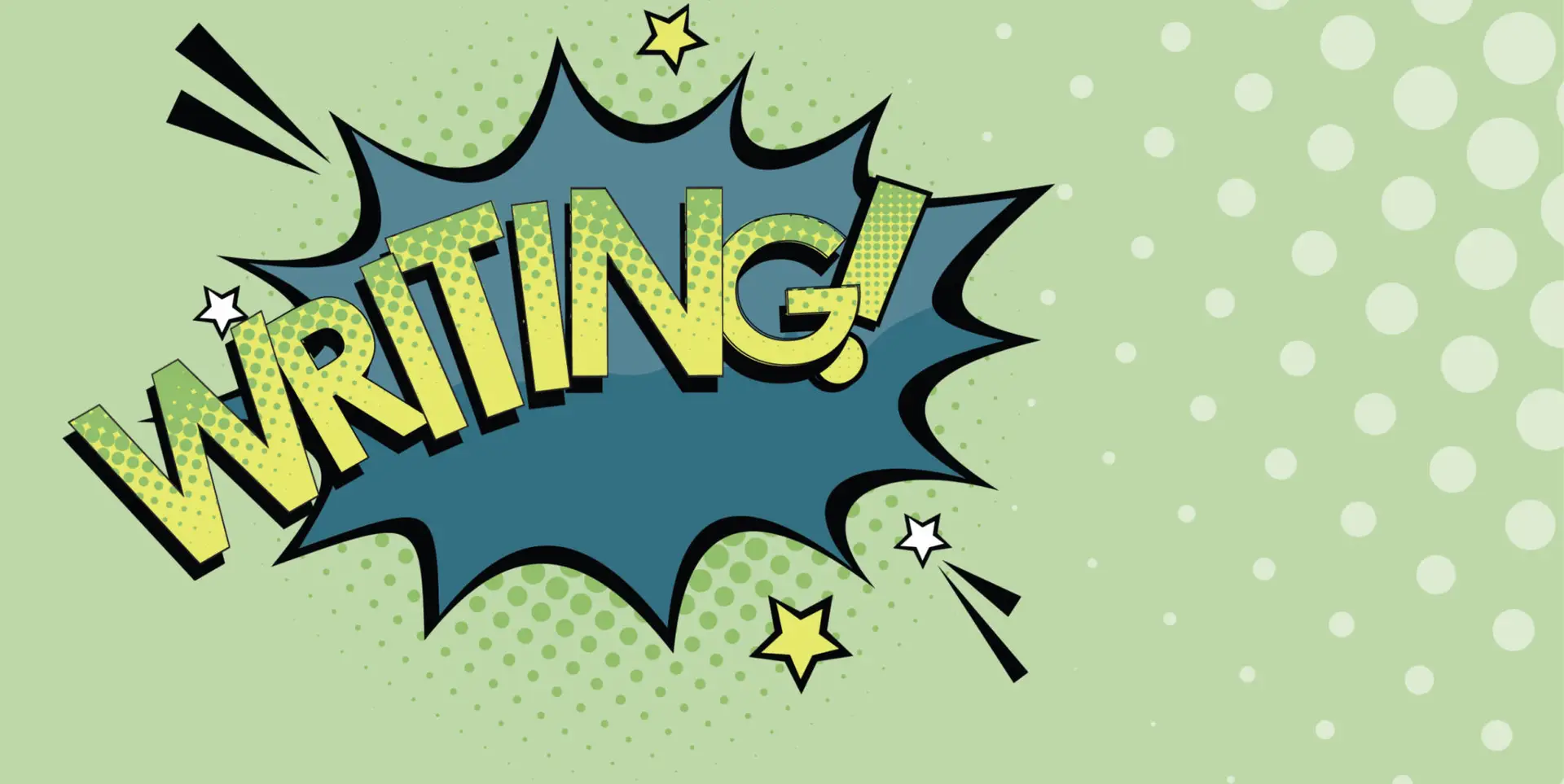
A classic example of this is the iconic use of “sound words” within Pop Art (âBOOM!â, âBANG!â, âPOP!â). In this case, the use of design elements to enhance the meaning of messages is a bit extreme, but you get the idea. On the flip side, the copy you use (type of words, language, a number of words) can make or break a design and its function. Strategic design is deserving of strategic copy.
There is a reason graphic design is often referred to as communication design. Without functional, legible, deliberate information, design would just be art. Weâre not knocking art. Art is great, but it can also be anything you want it to be, but design elements should not be up for interpretation.Â
Moral of the story: Design has a goal, a strategy, and an execution that 99.9% of the time cannot be accomplished without the use of good, effective writing and content.