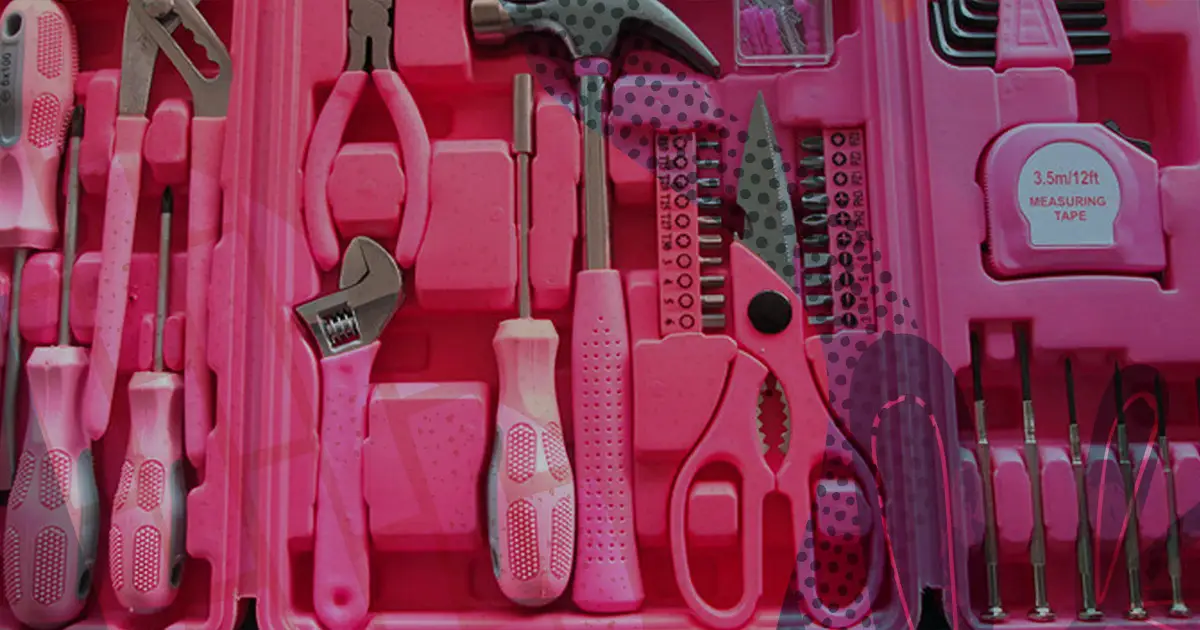
If you come at us with pink power tools or some antiquated housewife advertising, you are practically guaranteeing we won’t buy your product. Assuming women will go wild for anything wrapped in pink, or will only use power tools if they are a feminine color, is beyond insulting.
Repeat after me; Gendered Marketing is stupid and stereotypical. It is more likely to result in outrage than provide any actual benefits you could possibly reap. You might think to yourself, “well, this has certainly changed over time; it’s not the 1940s.” But, nope, most brands are just more subtle about it.
Let’s look at kids, for example. According to an Atlantic article by sociology professor Elizabeth Sweet, in 1975, less than 2% of toys were explicitly marketed to either boys or girls in Sears catalog ads. By 1995, gendered toys made up roughly half of the Sears catalog’s offerings. For adults, brands might aim targeted online ads for household products to women, while a sports equipment company might only portray men in their commercials.
Basically, we are going backward. Not to mention advertising is completely missing the mark with the LGBTQIA+ community. The fact is your consumers don’t fit in these nice, tidy gender boxes and brands are floundering trying to figure it out. We do not want to be categorized or reduced to a single identity. Playing off stereotypes in an attempt to sell a product to a specific demographic sounds like a great way to tank your brand’s reputation.
According to a J. Walter Thompson Intelligence report from 2015, 81% of Gen Zers strongly believe gender does not define a person as much as it did in the past. They’re also embracing the idea of gender nonconformity, with nearly 60% reporting that they believe forms should include selection options outside of “man” or “woman.”
With that in mind, let’s take a look at how brands have traditionally stereotyped and marketed to women vs. men.
Women:
- Predominantly in charge of the housework, cooking, child-rearing, and husband wrangling.
- Weak and small-brained. Ok, that last one is a bit of a stretch but do you remember the BIC Pen? The pen was “designed to fit comfortably into a woman’s hand,” featured pastel colors, and was priced at a 70% increase from BIC’s non-gendered pen. I mean, WTF.
- Best suited for picking out lipstick colors as opposed to using a drill or table saw.
Men:
- Hypermasculine, chops wood on the weekends while enjoying a craft beer.
- “Bros” – Think, Axe Deodorant, and high fives in the locker room.
- Always entitled to the good razors.
- Family breadwinner. Daddy brings home the bacon, and mom cooks it up.
Advertisers are making these idiotic assumptions because it’s easier than doing the market research and finding out what truly motivates their customers. Consumers want brands that care, who take the time to understand them and reflect their beliefs.
The reality is simple; Companies need to think outside gender, be inclusive or face extinction.
If you’re in need of more hot takes like these or other advice, you know where to find us.