
Clients often come to us with rebranding requests of all shapes and sizes. It’s rare, however, to find anyone outside the industry with an in-depth understanding of the complexity that is the term, “brand.” A common misconception is that your logo mark = your brand. A logo is a key component of your visual brand, but doesn’t reflect the idea of branding as a whole. Branding actually goes much further than its typical definition. (“A name, term, design, symbol, or any other feature that identifies one seller’s good or service as distinct from those of other sellers.”) The problem with this definition is that we are missing the strategic process used to combine all brand elements into one cohesive impression: messaging, key words, imagery, symbols, typography, composition, products, displays, etc. When clients request a rebrand, what they typically mean is a recreation of their visual brand and its elements. We talk to many clients that have a sound sense of who they are, what their goals are and the experience they offer to their specific audience. They just haven’t figured how to visually communicate this across multiple mediums in a way that is appropriate for their target publics. This is where a true understanding of branding and all its components comes in.
Logo Mark
Let’s think of few unmistakeable, iconic logo marks, like Apple and Coca-Cola. Yes, over time these symbols have left a significant impression, but the symbols themselves are not what made these two brand empires what they are today. A logo is just one piece of the pie, whether that be the Apple pie (see what I did there?), the Coca-Cola pie, the Nike or the McDonald’s pie. Your logo should be a summary of your company’s name, products, culture, tone and message; this can be straightforward, abstract or in between, as long as it gets the point across. Logos, however, have limitations as far as the depth of communication they allow. Would the red, old-style script on its own reflect a delicious beverage that can help you connect with others in perfect harmony, on the beach, at a concert, at school or anywhere else when you ‘Share a Coke’? Probably not. This is where your visual brand comes into play.
Visual Brand
Your visual brand is how you translate your message through colors, symbols, imagery, compositions, music, etc. across multiple mediums and create an experience that can be viewed and felt by your audience. A visual brand creates the basis for what your logo will come to represent. The shitload of brainstorming and research that goes on behind the scenes is how we develop an experience that displays your brand perfectly. Take color for example. Colors are more than red, blue, green, purple, yellow, colors subconsciously evoke feelings. These feelings change from culture to culture, possibly generation to generation, etc. effecting how your message is communicated. Imagery: imagery is planned strategically to show who your client could be when they pick up your product or use your service and why they need to be this person. Selecting the perfect font to not only display your message through type, but through feeling and tone. All of these things are just a few examples of the strategic process that is creating a visual brand. We forget that a logo didn’t just magically appear with a strong, clear meaning, it has an entire support system of other elements behind it driving that force.
Even the most minimalistic visual brand has a complex system of working parts that depend on one another to be a successful whole. The most iconic logos didn’t develop symbolic meaning on their own, it is the result of small components that build up an entire brand.
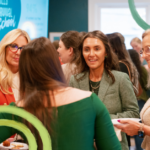
The way you show up at work shapes how people remember you.
Last month, alyshiahull joined bodespeaks on Happy Hour Hustle to talk about what workplace authenticity really means. Alyshia is a New York-based freelance journalist who writes for Business Insider, Fast Company, USA Today, Inc., and Entrepreneur. If you are ready to bring your authentic self to work, episode #134 is for you.
Listen to Happy Hour Hustle on Spotify, Apple Podcasts, and Youtube. Link in bio.


The power of the Women`s Entrepreneurial Fellowship, in a graduate`s own words:
"Growth is never accidental, it comes from being willing to learn, adapt, and embrace change. After nine months of dedication, reflection, and business development, I proudly graduated from the Women`s Entrepreneurial Fellowship (WEF) during the Small Business Association of Michigan Annual Meeting.
Throughout the program, I challenged myself to evaluate every aspect of my business, celebrating what was working while identifying opportunities for growth and improvement. The journey was made even more meaningful through the support of an incredible cohort of women entrepreneurs, the guidance of mentor Gina Jacquart Thorsen, and the leadership of bodespeaks and her team.
A sincere thank you to smallbusinessassocofmichigan for investing in second-stage women business owners and creating opportunities that empower entrepreneurs to build stronger, more sustainable businesses."
— Mary A. Barton, President and CEO of Equitable Accounting Solutions and proud WEF graduate.
Applications for the next cohort are now open. Link in comments.

"Out of failure comes growth – you have to see it as an opportunity."
bodespeaks joined cuzzinjustin on the strictlyfromnowhere Podcast for an honest conversation about entrepreneurship, embracing your superpowers, and building a personal brand that`s actually yours, the wins, the setbacks, and everything in between. And naturally, dropped an f-bomb or two along the way. You don`t want to miss it.
Full episode in the comments 👇

AI doesn`t treat every source equally; it trusts what`s credible, cited, and current, like news coverage.
Showing up in the right places isn`t just good PR. It`s how the robots (and the humans) get you right.
Read the full blog at the link in bio.

"If you don`t get up and grind every day, the needle isn`t gonna move."
We sat down with brandonmccraney, founder and Master Blender behind olderaleighdistillery in Zebulon, North Carolina. Brandon spent fifteen years just thinking about whiskey before he finally opened his doors, and even then it took four more years, a dozen rejections, construction delays, and a global pandemic to get there. Two years later, Olde Raleigh had already won Best Micro Distillery in the US.
Check out the latest episode of Happy Hour Hustle, where Brandon shares what it actually took to grow a business through COVID, the military discipline that kept him going when everything else said quit, and how working with people turned out to be the hardest part of the job.
Listen to Happy Hour Hustle on Spotify, Apple Podcasts, and watch the whole episode on Youtube. Link in bio.

It`s 9 months that is impossible to sum up in a video - but here`s just a taste.
This Women`s Entrepreneurial Fellowship is resources, mentorship, and connections that you can`t build anywhere else. We`re so exicted for what the next cohort will bring.
Apply now at the link in bio.
smallbusinessassocofmichigan


Responses