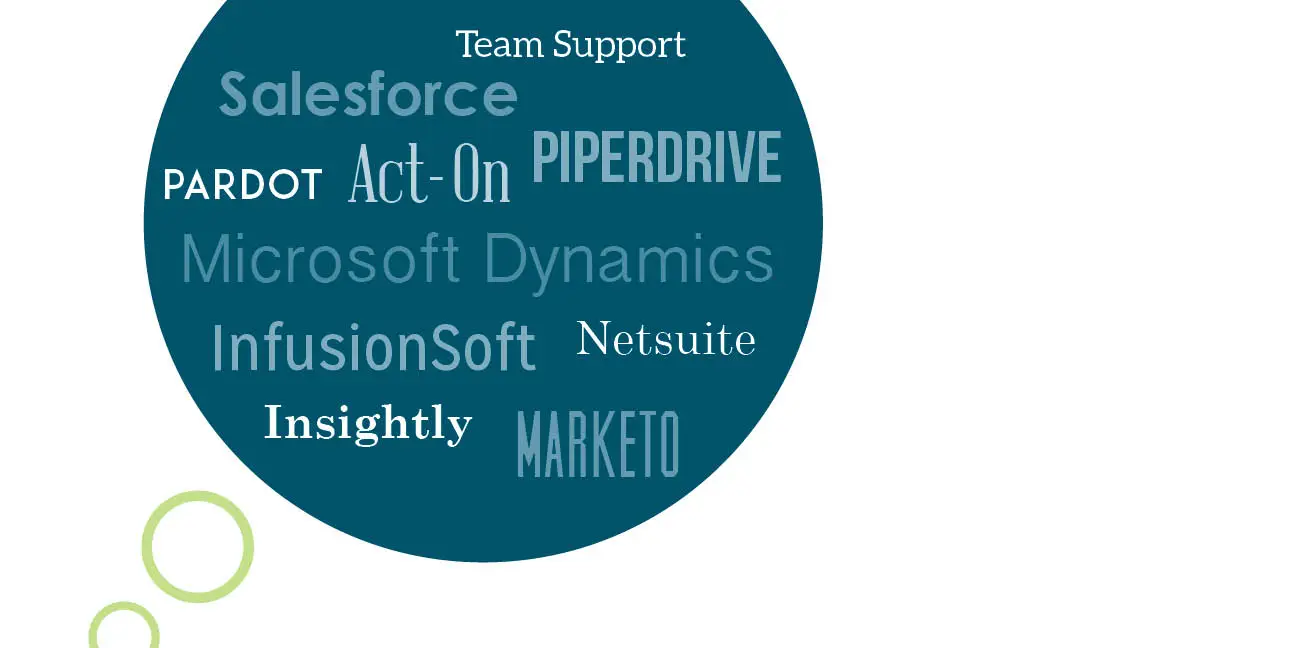
What CRM are you using?
What CRM Should you be using?
What is a CRM in the first place?
In a nutshell, Customer Relationship Management (CRM) refers to practices, strategies and technologies that companies use to manage and analyze customer interactions and data throughout the customer lifecycle, with the goal of improving business relationships with customers, assisting in customer retention and driving sales growth. CRM systems are designed to compile information on customers across different channels. Read the full definition here (techtarget.com). Yeah, it’s pretty much a database of customer information. How you use it is why it is important.
Whether your business is selling products, large scale system installations or even products direct to consumers, you’ve likely considered a way to manage your customer data, which by the definition above is your CRM.
What can a CRM system do for your business?
CRM tools are intended to help track interactions with current and future customers for the entire organization. (via Forbes). While it is mostly thought of as a customer service and sales tool, a CRM can serve a business in many ways.
Consider all of the systems used in regular customer communications as a reason to implement a CRM database.
- Are you emailing customers individually or via a broadcast email platform like MailChimp or Constant Contact?
- Are you mailing customers postcards or letters?
- Do customers call you with questions or to place orders?
- Where is order history tracked?
- What is the customer’s latest payment status?
- What was the last conversation with that client?
CRMs allow you to understand what products/services a customer has purchased. It also allows for customer service or sales people to have visibility to calls or emails they have had regarding service questions. Keep in mind that CRMs are not just for sales and marketing people.
All key staff should have visibility into recent customer interactions. No one would want to call on a customer to offer a new service if they are having service issues. How would they know? Or, what if they have not paid for their first order and your sales person wants to sell them something else. Client says yes, then your accounting department says no. CRMs can offer visibility to all departments and customer touch points.
Most CRMs, or the stronger ones, should integrate with your email system, so that customer interactions, any of them, can be easily captured in the CRM that way as well.
When it comes to selecting a CRM for your business, start outlining what information is critical for the company, and each department to know about a customer/prospect. Try to keep it to no more than eight different items, or less. Focus on core database needs and thus system functionality to hone your selection process.
You’ve likely heard a ton about SalesForce and HubSpot these days. Who hasn’t?! They have huge marketing budgets and are just about everywhere you turn. Yet there are many, many more solutions out there (like 300 or more). Take the time to look for a local CRM solutions provider, who might represent several types of systems. They may be able to help you clarify your needs, and narrow the selection processes.
Always look at your internal needs before you go looking at a system and say, we’re going to use “X” CRM. The reason you picked it shouldn’t be because it’s one you’ve “heard a lot about” lately.
A few tips before you select a CRM:
- See if they offer demos for a few users and actually try it out
- Can it easily integrate it into your every day processes and workflow? If so, it’s likely easier to get people to use it
- Identify point people in each department to know what data is critical for customer/prospect interactions
- Look at product reviews from other users
- See if there are any users of that platform near you – can be different industries, but understanding the support, set up and that companies experience in CRM implementation will only help
- Consider if it need to be cloud based, so users can access it anywhere or is on your network sufficient.
In our research, we found a helpful list of 352 CRM systems. 352 of them!! You can check that out here – you can search by price, # of users, industry, ratings, etc. Many you probably haven’t heard of. Heck, we haven’t heard of lots of them either. Which is why it’s important to do your research!
What About CRM Marketing You Ask?
Let’s not get CRMs confused with Marketing Automation. Marketing Automation is taking prospect and customer data points and setting triggers to automate the communications pieces that they are sent. Yes, it stems from your CRM Database, still you need clean data and processes in place before starting automation. We can talk about marketing automation another time.
What do we know about CRM Systems?
We are in the process of implementing a CRM system for one of our clients. We have worked with other client systems, and demo’d our a couple for our own business processes. This particular client we are working with sells online, and has one retail location. They have custom products, limited edition items, as well as standard items that can be ordered anytime. Ship dates vary by product type and production capabilities. Ship dates are assigned based on the product sku… we could go on, but this gets into the second phase with the automation part. That’s a lot of stuff to consider.
We looked at:
- Where customer and prospect data is coming from, (see other systems note below)
- How the client is communicating with customers/prospects now
- Other systems that are in place (shopping cart, store point of sale, email platforms, customer service platforms, etc.) and how will we integrate with them
- What the client plans to do with the data once they have it
Then we outlined the different scenarios a prospect or customer would take to get into the database. What do they receive now, and how can we enhance that?
- We started with the sign up forms on their website, separating where registrations are coming from. Customers are tagged, so we can communicate with them based on specific items they are interested in. (Think product lines, types or special services)
- We connected the online shopping cart with the CRM as well, so we know customer buying history, cart abandonment and lists they are a part of.
- We can tag or set other automation triggers for abandoned carts (among other things)
- Other steps will be integrating with the Point of Sale system in the retail location. Giving us more insight into customer order history, patterns and customer service information. We can then communicate with them about specific store specials and events – not blanket email to them like we would to customers in other parts of the country.
Stay Connected
We’ll let you know how this implementation goes. We’re just getting started, and it’s been an exciting and great learning experience for us too. If you want to stay up-to-date with what’s happening here at 834 and the work we’re doing, be sure to sign up for our email newsletters or connect with us on Facebook (or Twitter, Instagram, LinkedIn….). You get the idea.
Articles and references used for research for this blog:
- https://searchcrm.techtarget.com/definition/CRM
- https://www.forbes.com/sites/henrydevries/2014/07/29/what-is-the-best-database-for-a-small-business/#440e30ba6ecb
- https://www.businessnewsdaily.com/7839-best-crm-software.html
- https://www.softwareadvice.com/crm/small-business-comparison/
- https://www.forbes.com/sites/ianaltman/2014/08/18/the-secret-to-choosing-the-best-crm-for-your-sales-organization/#3c199a1860e4